
By Adv Johnson Gomez Tomorrow, October 5, 2026, marks a profound milestone in the journey…
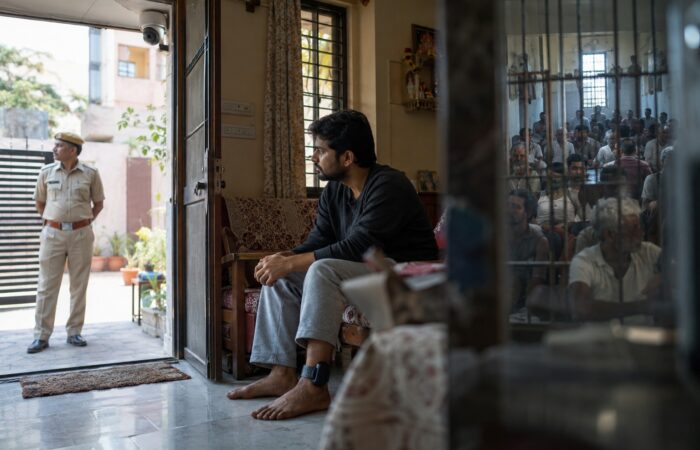
House Arrest as a Humane Alternative to Custody

Author : SHANTHANU
Institution – Government law college, Thiruvananthapuram
Course – Five-Year Integrated B.A. LL.B. (Hons.)
Semester – 7th semester
Recently, the Himachal Pradesh High Court has taken note of the issue of overcrowded and understaffed prisons in the state. Unfortunately, Himachal Pradesh is not the only state facing this problem. Prisons across India continue to struggle with overcrowding and inadequate staffing. The Standing Committee on Home Affairs, chaired by Mr. Brijlal, highlighted this crisis in its report on Prison—Conditions, Infrastructure and Reforms, 2023. The report states that Indian prisons operate at more than 130% of their sanctioned capacity. Alongside the issue of overcrowding, the report has also raised concerns about the difficulties faced by pregnant women prisoners because of poor infrastructure and limited facilities as it places serious physical and emotional stress on both the mother and the child. The large number of undertrial prisoners further adds to the pressure. According to the report published by Custodial Justice Cell of the National Human Rights Commission around 74% of the prison population are undertrials.This situation calls for a closer examination of how courts handle custody of prisoners.Where the circumstances of a case do not require confinement in prison, courts can consider less restrictive forms of custody. House arrest offers one such possibility.
House arrest as defined by the US department of justice is offenders being legally ordered to remain confined in their Own residences.They are generally allowed to leave their confined Residence only for medical reasons and employment. House arrest, as a form of custody,is used in different ways across the globe. It is sometimes imposed as a sentence after conviction. It also used as a means of keeping the accused in the custody during the trial.
The Supreme Court examined the legality of house arrest as a form of custody in Gautam Navlakha v. National Investigation Agency (2021). In this case, the top Court recognised house arrest as a form of custody. It held that, in appropriate cases, courts can order such custody under Section 167 of the CrPC ( currently Section 187 of BNSS). The Court also clearly explained the factors that judges should consider before ordering house arrest. It includes the age and health of the accused, their antecedents, the nature and seriousness of the offence, the need for any other form of custody, and the court’s practical power to enforce the conditions of house arrest effectively. In this context, House arrest as an alternative form of custody naturally leads to another important question: how can we implement house arrest effectively, what practical difficulties can arise, and how can we tackle them?
The Supreme Court’s order in the same above cited case shows how the Court implemented house arrest in practice. The Court allowed Navlakha to stay at his residence but imposed certain restrictions. Only Sahba Husain and one housekeeping staff member was allowed to stay with him. He was not allowed to leave Mumbai or Navi Mumbai. He can meet only two family members once a week for three hours. The Court also restricted his access to communication. He was not permitted to use any other communication device. But, police could provide him with a phone for 10 minutes once in a day, but could only make the call in the presence of a police personnel. Sahba Husain was allowed to use only a basic phone without internet. The Court also placed restrictions inside and around the residence. Navlakha was orderd to install CCTV cameras at the entrance and exit and bear the cost of their installation and maintenance. He could watch only a non-smart television and read newspapers. The Court also prohibited him from contacting witnesses or interacting with the media. He could take walks outside the residence, in the presence of a police personnel and was not allowed to speak to anyone. The authorities can inspect the premises whenever it seems necessary, although the Court cautioned them against unnecessary harassment. Navlakha was also ordered to provide a local surety of ₹2 lakh and deposit ₹2.40 lakh towards the cost of the police personnel deployed for his security. The Court also made it clear that he will lose the benefit of house arrest if he violated any of these conditions. The authorities was orderd to monitor movement, communication and visitors,and also ensure that the accused does not interfere with the investigation or the trial. This again raises practical question. It is about police manpower, surveillance, cost and privacy.
The conditions imposed in this case shows that house arrest can involve strict supervision. As India begins to explore house arrest as an alternative form of custody, this may be a reasonable starting point. But,several practical difficulties still need attention. If authorities fails in implementing it properly, house arrest will not actually solve the problem of overcrowded prisons. Instead, it could simply shift the burden from prisons to the police and other agencies.
One of the most important practical difficulty that arises regarding the conditions imposed in Navlakha is the financial burden placed on the accused including the cost of installing and maintaining CCTV cameras. Another major difficulty includes the deployment of police personnel as this may work in an individual case, the same approach cannot work if courts start using house arrest widely. So, the directions laid down in the judgment can therefore serve only as a starting point. The authorities must develop a workable framework before they apply house arrest on a wider scale. For developing such a framework, looking into foriegn jurisdictions is exremely beneficial
According to office of justice programs, US department of justice, in at least 20 States, electronic bracelets are used to detect house-arrest violations. Electronic bracelets means, the accused have to wear a small device around the ankle. The tag will let the authorities see whether the accused stays within the area allowed by the court or if they enter a restricted area. This allows the authorities to monitor the accused without keeping police officers at the residence throughout the period of house arrest. Some reports suggest that Odisha has alrewdy started working towards introducing electronic ankle bracelets to monitor and track individuals under house arrest. Alongside other monitoring methods, radio-frequency monitoring is another way of keeping track of someone under house arrest. A small device is placed on the person.At the same time a receiver is installed at their home. This will help the authorities to check whether the person remains at the required location, especially during curfew hours. If they leave the permitted area, the system can alert the authorities. Unlike GPS, it does not continuously track the person’s exact location; instead, it mainly confirms whether they are at home. There are also some non-technical methods used to monitor individuals under house arrest. It includes regular and unannounced visits by the police or other authorities. courts use house arrest either before trial or as a sentence after conviction. House arrest is imposed as a sentence, generally,for less serious offences where the offender does not pose a significant threat to society. For example, in Canada, courts can impose house arrest as part of a conditional sentence under Section 742.1 of the Criminal Code. This lets eligible offenders who is serving sentences of less than two years to serve their sentence in the community instead of in prison. In such cases, the court may require them to remain at home, follow a curfew, report to a supervisor and comply with other conditions.In the United Kingdom, Home Detention Curfew is used for eligible prisoners. It allowes them to spend part of their sentence outside prison and remaining at an approved address during specified hours. From this it can be clearly seen that different countries have tried to employ different methods of monitoring for implementing house arrest. However, India is still at an early stage in using house arrest compared to other countries. Keeping in mind the practical realities in India and the need for an alternative to custody, the following framework is suggested.
- Any new system should be introduce with proper planning. For that purpose, a committee may be constituted compromising representatives from the judiciary, the government, prison authorities and other relevant experts to oversee the implementation of house arrest and its progress. The committee may also divide different areas among the jails responsible for supervising persons placed under house arrest within their respective jurisdictions.
- In the initial stage, house arrest may preferably be considered only for specific vulnerable categories,such as pregnant women.This would provide an opportunity to assess the practical working of house arrest before extending it more widely.
- Electronic ankle bracelets may be used to monitor the movements of persons under house arrest. as this method has been adopted in several other countries. Before placing a person under house arrest, the authorities should inspect the residence to ensure that it is suitable for the purpose. The court should also clearly specify the restrictions on mobile phones, internet access and other forms of communication, wherever necessary, and inform the person of the consequences of violating the conditions.
- Family members and lawyers may be permitted to visit during designated hours, similar to the arrangements followed in prisons. Family members may also provide food, medicines and other basic necessities at their own cost. Where the person does not have family support, the authorities may make the necessary arrangements. If electronic monitoring is considered sufficient, CCTV installation at the residence may not be necessary.
- The committee may also direct the superintendent of the concerned jail to arrange periodic medical check-ups for persons under house arrest. This would help ensure that their health and basic needs are properly addressed while maintaining necessary supervision.
- If the initial stage proves successful, the committee can consider extending house arrest to other categories. The committee can also set up a special team to study the different technologies that could be used to make house arrest work effectively. By the end of this stage, the committee should have a clear idea of who may be eligible for house arrest, including the categories of persons, the types of offences and the length of sentences for which it may be considered. It should also identify the other factors that need to be considered before granting house arrest. Clear guidelines should be prepared so that courts and authorities have a proper basis for deciding who can be placed under house arrest and what conditions should apply.
- As the final stage, if possible, the committee may consider extending house arrest to economically weaker section of people who do not have a suitable home or the basic facilities required for house arrest. A person should not be denied this option simply because they cannot afford proper accommodation. In such cases, the government may provide financial assistance or other necessary support to help them arrange suitable accommodation. Where required, the authorities may also provide temporary accommodation where the person can stay under the required conditions. This would ensure that house arrest is not limited only to people who have a proper home and the financial means to support it.
on proper monitoring, clear guidelines and effective supervision, house arrest is guaranteed to make a substantial improvement in the quality of prison system in India. But without proper implementation of these measures, house arrest may simply shift the burden from prisons to the police and other authorities responsible for supervision. Therefore, a practical and well-planned system is needed to ensure that house arrest genuinely reduces the pressure on prisons while also protecting the rights and dignity of those placed under it.
Related Posts

Comments (0)